Exploratory research into esports communities
Background
Active Network provides services to connect people at physical places, I identified a new market segment related to how it's current services may support a digital environment. I created a research plan and conducted interviews with the support of the design director.
Objective
The purpose of the study was to gain an understanding of how esport players improve by training with other players and coaches.
Active has several products that facilitate private or athletic camps, league management software, and search tools for finding activities. My hypothesis was that esport programs could potentially provide the same services to a new market.
Participants
This research study was based on qualitative interviews conducted with 9 individuals that play fighting games, MOBAs (e.g., League of Legends, Dota 2), and first-person shooters. One caveat to this research sample is that four of the participants belonged to a local fighting game club based in Dallas, Texas.
Researching and learning more about fighting games was beneficial since it’s a niche genre. Fighting games have a smaller audiences and poor online support, making local communities critical for improvement.
Findings
The interviews identified two primary personas of esport players: social and competitive. Both groups have distinct goals, traits, and interests to compete in games.
Social persona
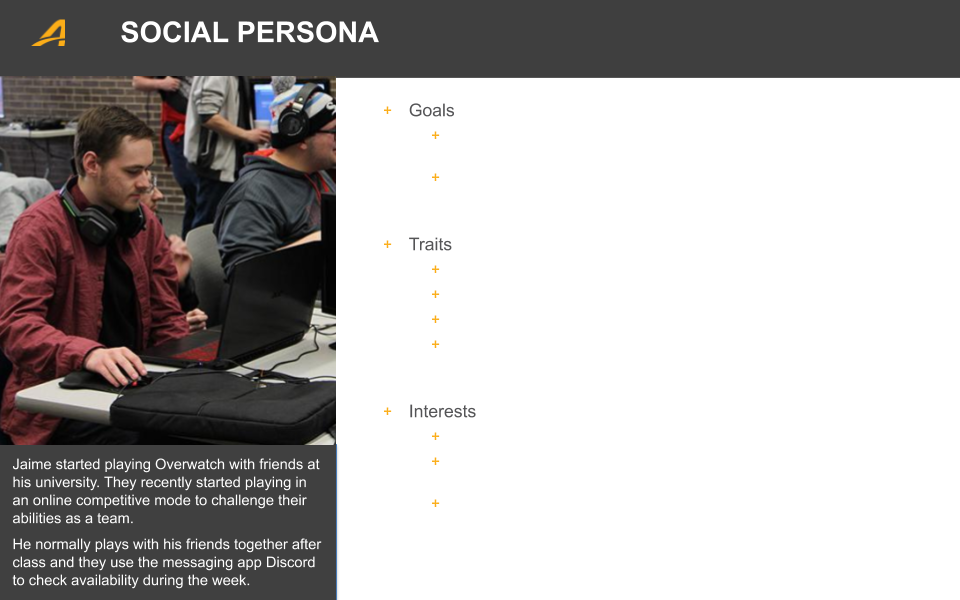
The social persona primarily plays esports as a way to spend time with friends. These players tend to be more creative in how they play or approach the game. Social groups help players practice more consistently and they often watch pro matches to fun, learning new techniques or ideas for experimentation.
Social groups also encouraged better communication for team sports, and consistent practice, which helped to counteract feelings of burnout or stagnation of their perceived abilities.
Competitive persona
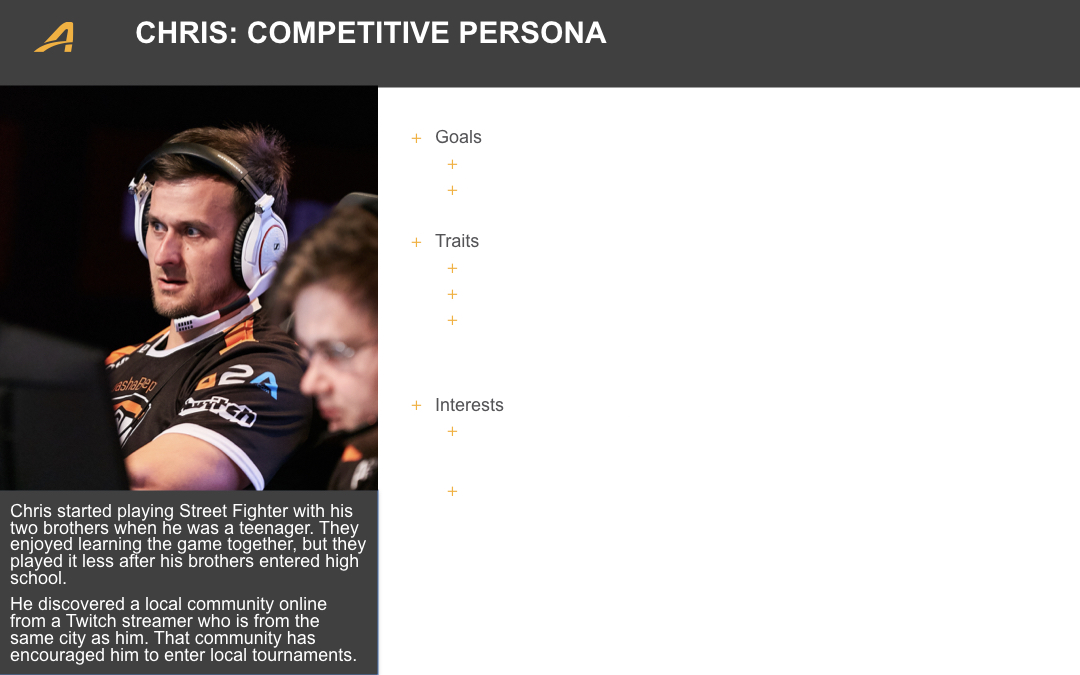
The competitive persona cares more about challenging themselves and obtaining mastery of their abilities. These players enjoy overcoming difficulties and tend to challenge themselves through clear goals, which may include playing in tournaments.
Journey mapping
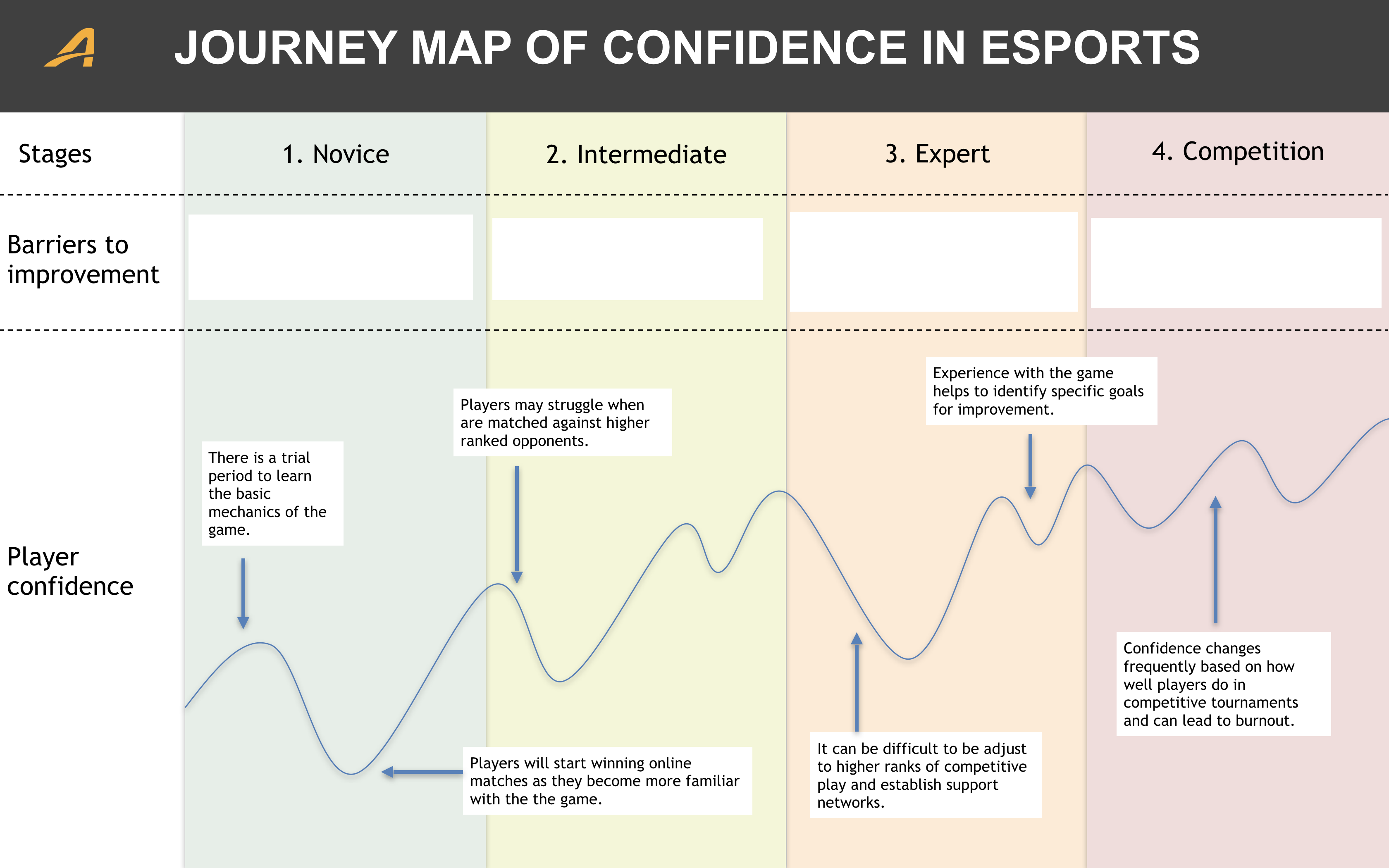
From the interviews, I identified four stages of players’ skill development: Novice, Intermediate, Expert, and Competitive. I also found specific traits that tended to result in failure and success for players. Failure often came from not consulting other players or online resources for assistance. These players also tended to have poor communication skills and did not fully understand improvements required for success. These players were also much worse at goal setting than more successful players.
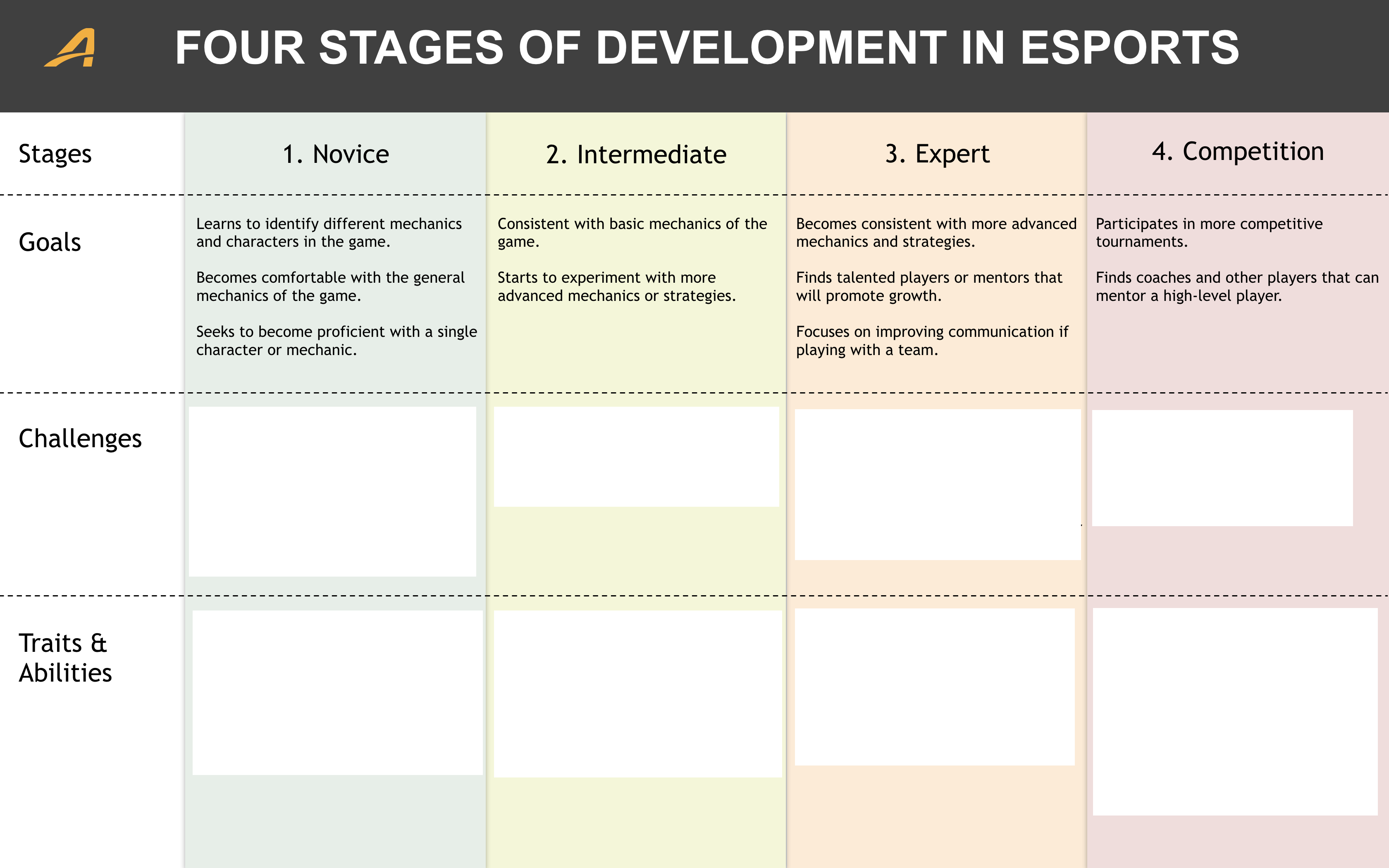
Success was highly correlated to practicing different mechanics and developing specific skills. Successful players had clear goals that they wanted to achieve and they leveraged social groups to help identify mistakes and targeted areas for improvement.
Recommendations
The findings of this study could benefit multiple Active products. Since esports are a new and fast-growing market, it is difficult for players to find social groups to practice with. It is also difficult for players to find mentors or experts for more guided instruction. Most of the current esport leagues are professional or comprised of university students, excluding many potential players from creating teams and challenging themselves in leagues by competing with other local or online communities.
I regret not advocating more for outreach into this market, since Active was in a strong position to address the identified pain points for players, especially as people's social lives and time spent outdoors declined rapidly due to the pandemic, which started as I finalized my findings.