Improving service to high net worth clients
Objective
A financial company’s Product management team acquired a new tool for managing high net-worth clients’ financial accounts. This new tool was intended to help the company scale its client management capabilities & offerings by offering more personalized services to clients with less overhead.
I supported the product manager alongside business analysts, solution architects, and software development teams to provide a simple workflow to accelerate the migration of all client accounts within a year.
Challenges with the initial planned system workflow
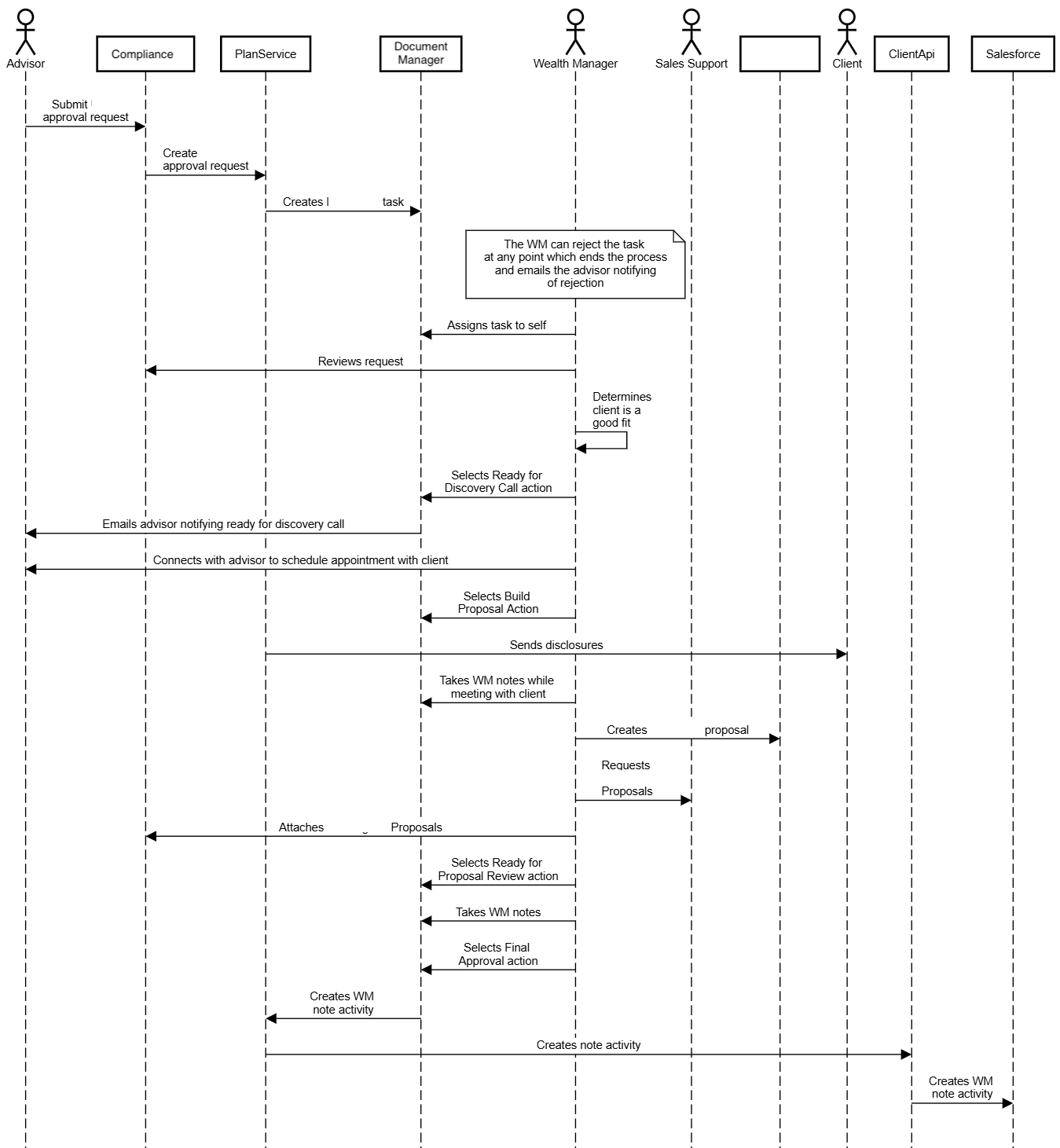
The above process map has the following drawbacks:
- Created additional dependencies on legacy software that the company wanted to fully depreciate and retire.
- Uses a completely different workflow from all other account opening processes and makes it difficult to create financial forecasts.
- The new system required more resources from the training department and IT helpdesks compared to the legacy system.
I identified an opportunity to create a more cohesive alternative system workflow that aligned with our Salesforce environment, created a singular workflow for opening financial accounts, and created more holistic sales reporting for executive leadership.
Due to my concerns regarding the initial planned process, I chose to design and test a prototype to develop my business case for altering the proposed workflow. My prototype leveraged Salesforce, and an internal compliance tool to meet regulatory requirements.
Step 1: Explain the sales process
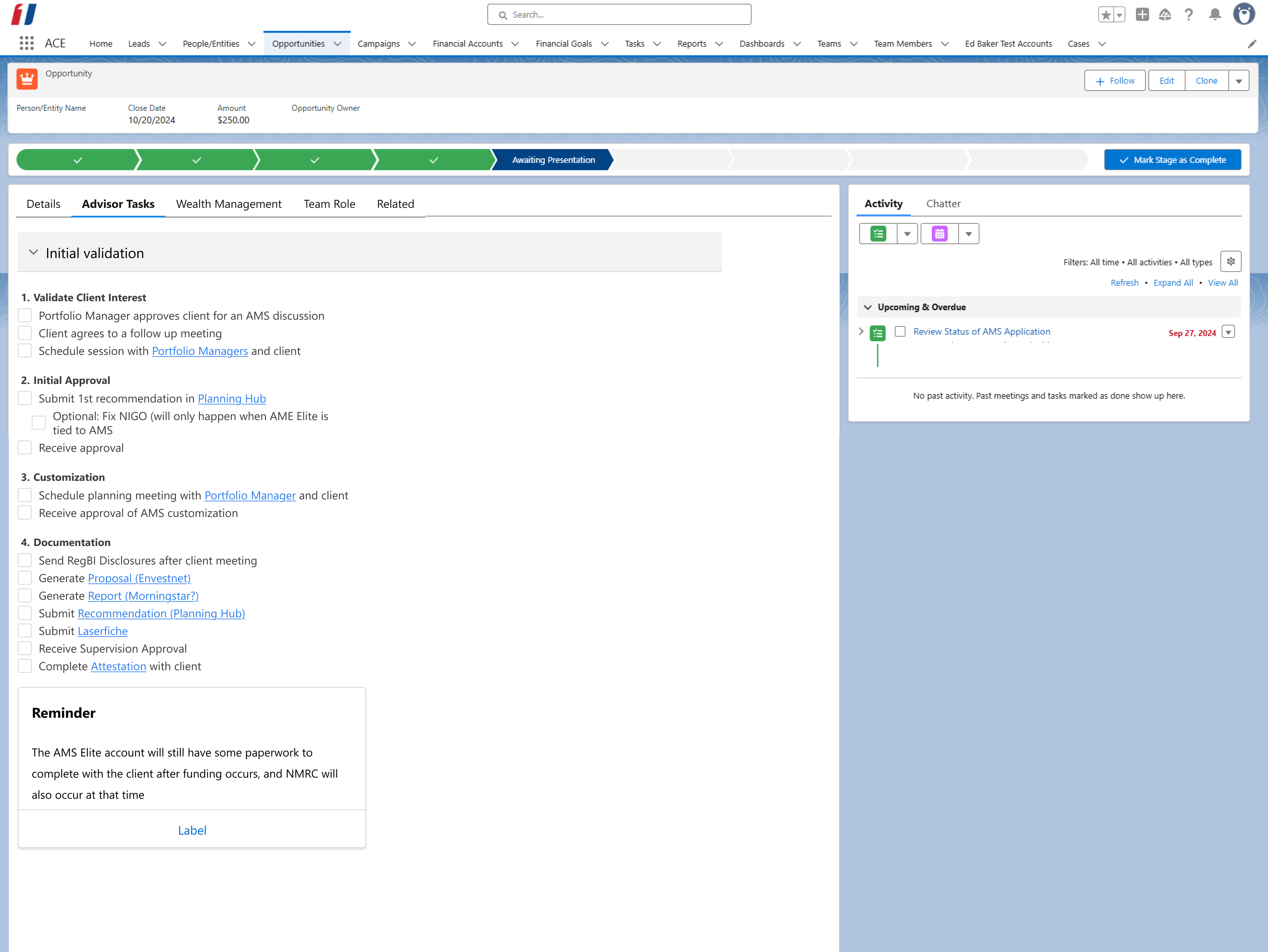
Both advisors and their assistants use Salesforce; however the company only offers training to advisors and documentation for this new process exists outside of typical workflows. Streamlining the workflow would enable both assistants and new advisors to self-learn the company processes.
Step 2: Document changes for compliance
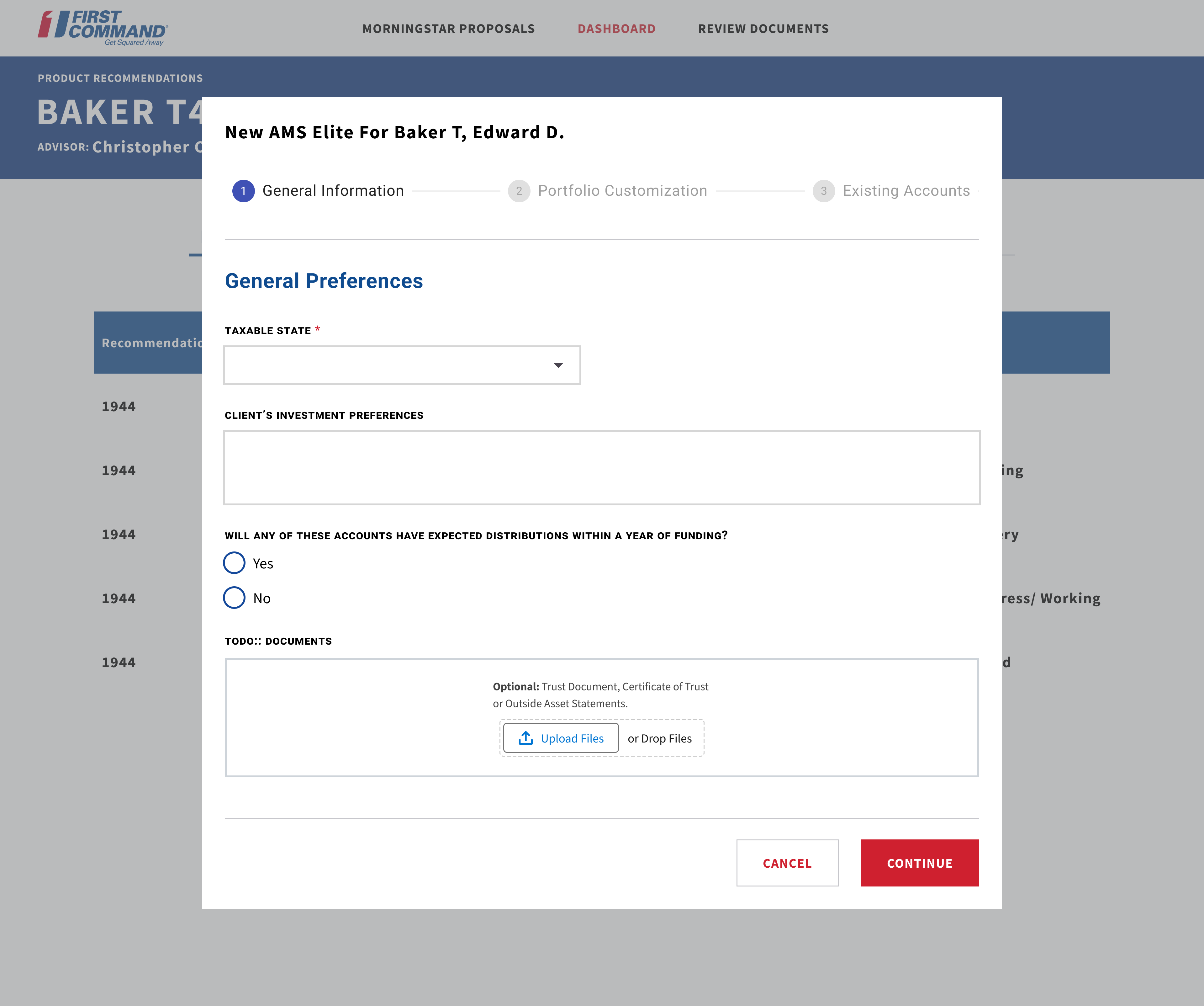
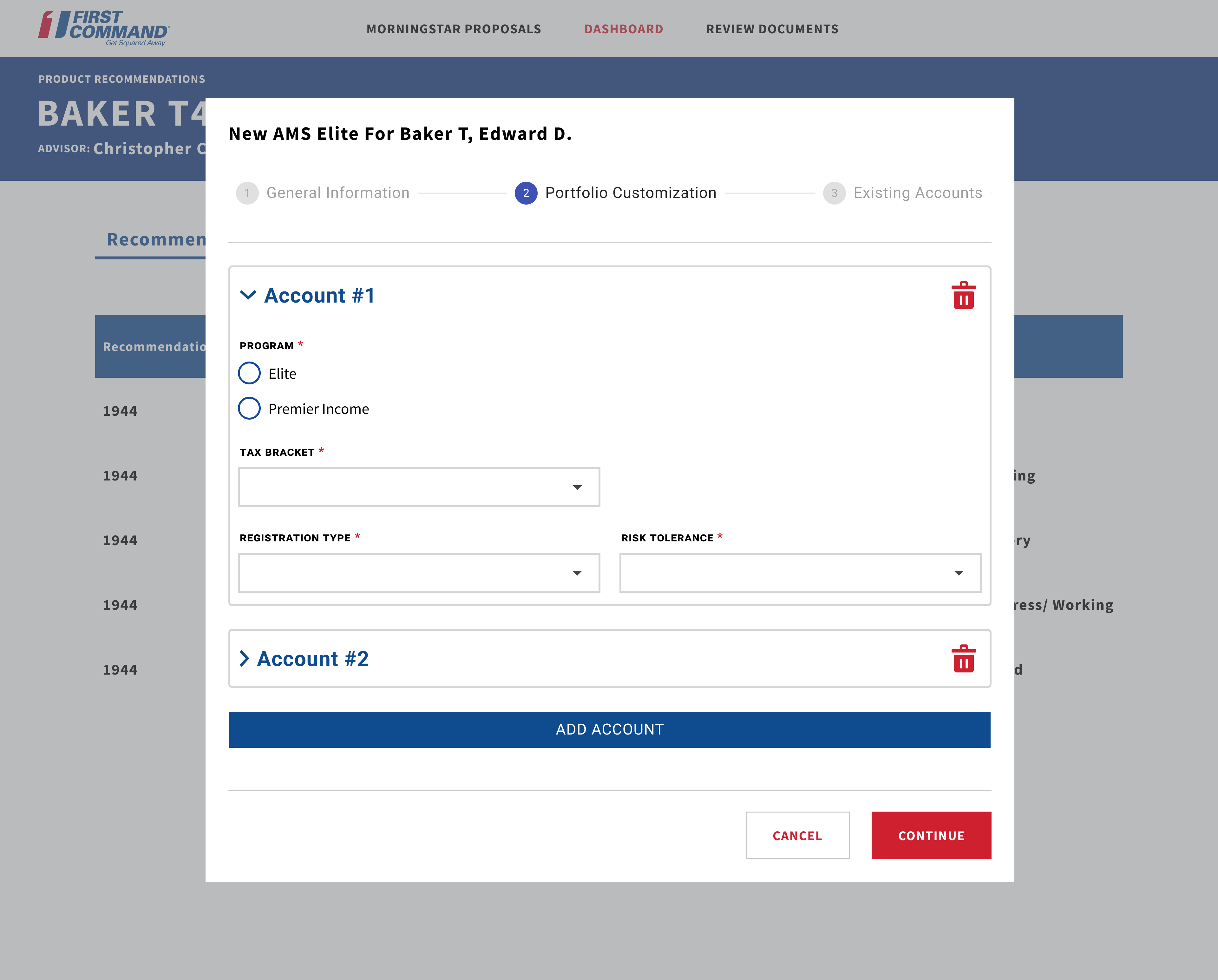
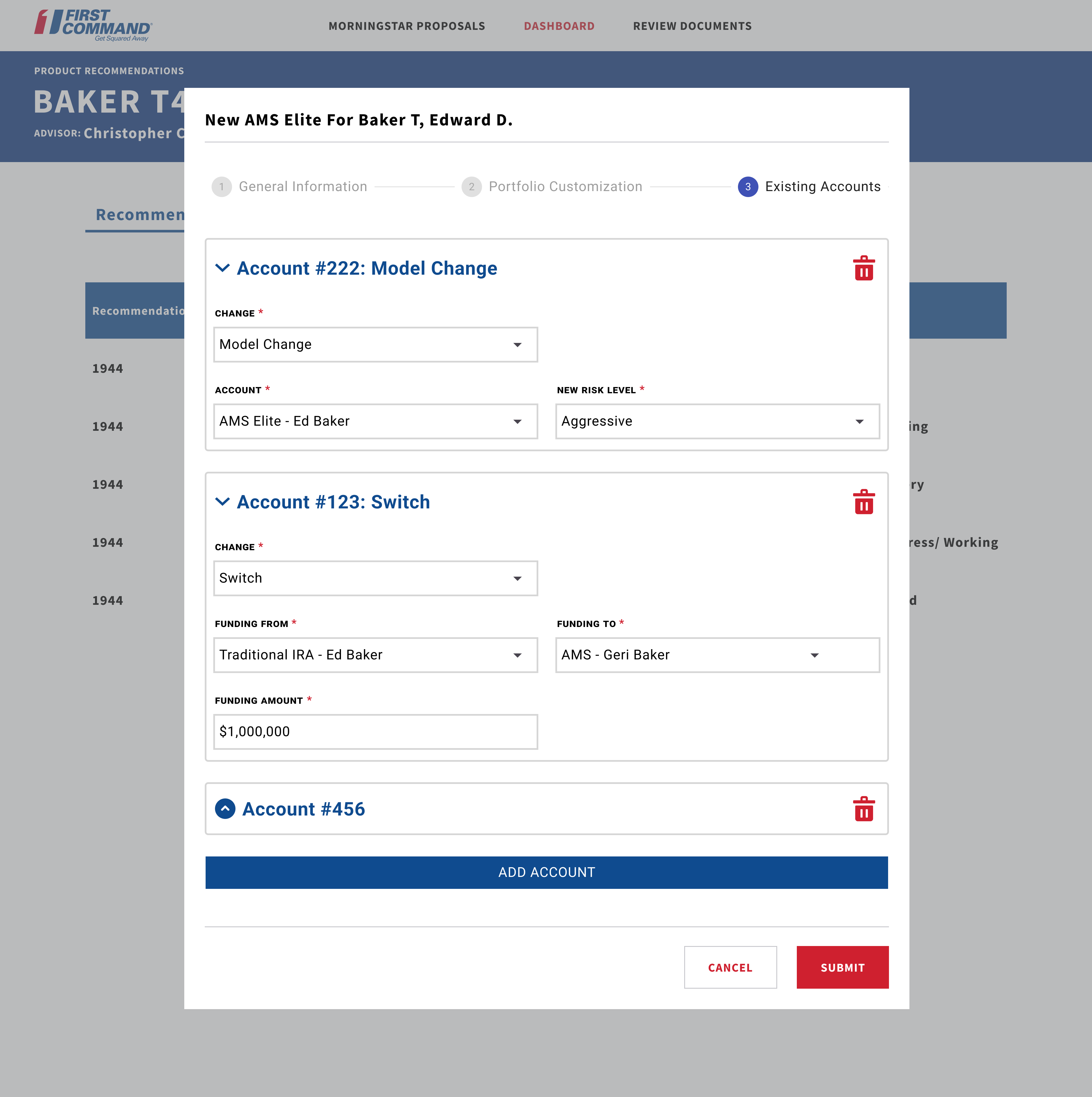
Another significant drawback of the new tool was a requirement for advisors to document how accounts are funded in order to meet additional compliance requirements.
Findings and next steps
I spoke with several advisors and assistants for feedback and discovered:
- All participants appreciated having a documented process to help internal offices communicate better but cautioned that it would probably not be used once advisors became familiar with the new process.
- One Advisor appreciated how the system could record clients’ previous investment decisions, which allowed advisors to make better recommendations.
- Advisors also mentioned their desire for a more digestible overview of the benefits of these new financial products.
I created an executive summary of my findings and recommendations for the VP of Design to escalate this issue and establish additional funding and resource capacity. I continued to support the product team’s initial rollout by conducting additional usability studies that were used to plan future enhancements.